Random things to know(of course i'm not an expert of any of this topics so take everything I say with a grain of salt)

mat00
If you want to share some things that you know I'll put them in

The beast of Gévaudan:
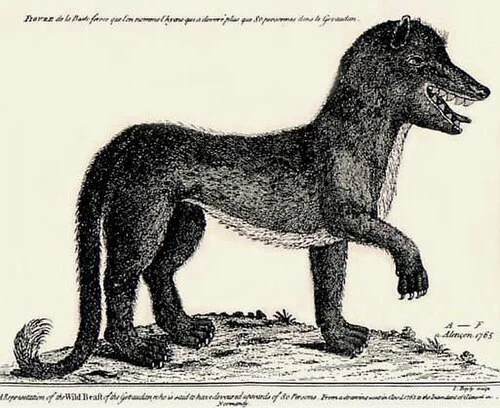
The Beast of Gévaudan is the name of the man-eating animal that terrorized the former province of Gévaudan of south-central France between 1764 and 1767. The beasts was described has having tawny/russet fur colour with dark stripes and a dark stripe down it's back, a tail "longer than a wolf's" ending in a tuft. It was said to attack with formidable teeth and claws, and appeared to be the size of a calf or cow and seemed to fly or bound across fields towards it's victims. It was described with the phrase "like a wolf, yet not a wolf. Its presence was so destructive that the Kingdom of France used considerable resources to eliminate the beast. According to some accounts, the beast attacked hundreds of times, even leading to the deaths of many. In the end, several animals, particularly wolves, were killed in an attempt to put an end to it. The attaks stopped in 1767, seemingly after a wolf was slayn by Jean Chastel, making people belive that what he had killed was not a wolf, but the beast.
source(wikipidia)
03/05/2026
Mythology of the scarab:
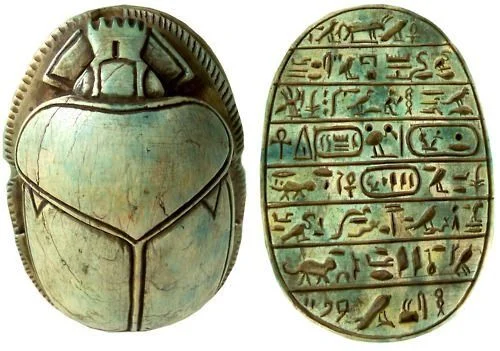
In ancient Egypt, the scarab often represented the god Khepri, a personification of the rising sun. Khepri was depicted as a man with the head of a scarab or as a scarab beetle, and it was thought that he was the one who "rolled" the rising sun, just as scarabs do with dung. The scarab was therefore a symbol of life, but also of rebirth; during the mummification process, in fact, a scarab amulet was often placed to aid the deceased in their afterlife. Fast-forward thousands of years: in the 19th century, the Victorians became obsessed with ancient Egypt and thus brought the scarab back into fashion. Victorian women wore jewelry made of scarabs or their wings, or inspired by them. In some cases, scarab wings were even used in clothing, an example being the dress worn by Ellen Terry (Victorian actress) to play Lady Macbeth, a dress later featured in John Singer Sargent's famous painting. Knowing all this, it's interesting to see the scarab necklace Mia Goth wears in Frankenstein. Not only is it beautiful and historically appropriate, but it could also be interpreted as a symbol of rebirth (which, in a certain sense, happens to the Creature).
sources(wikipidia(scarab, Khepri, Lady Machbeth painting))
03/05/2026
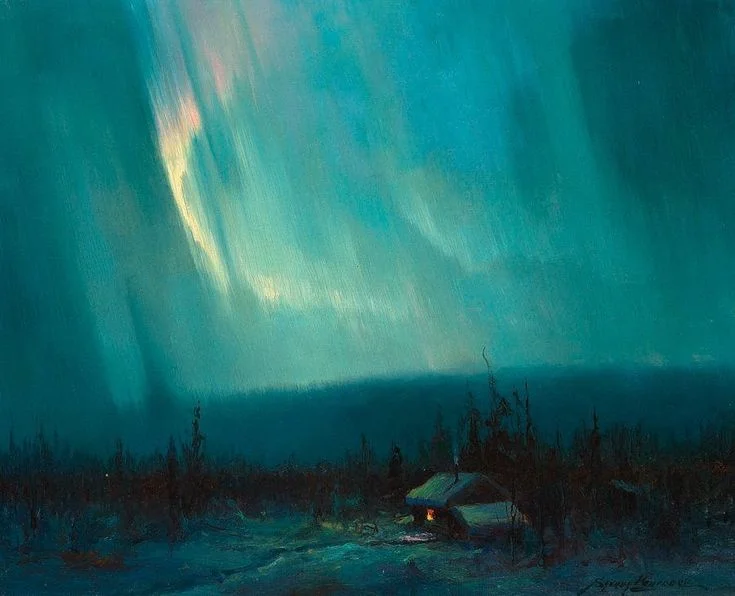
The suounds of the Northen Lights:
Sometimes, during the appearance of the aurora borealis, sounds that resemble hissing can be heard. These are electrophonic sounds, a phenomenon that can also occur, although much more rarely, during the appearance of fireballs. The origin of these sounds is not yet clear: it is believed that they are due to local disturbances in the Earth's magnetic field, caused by an increased ionization of the overlying atmosphere.
source(wikipidia)
03/05/2026
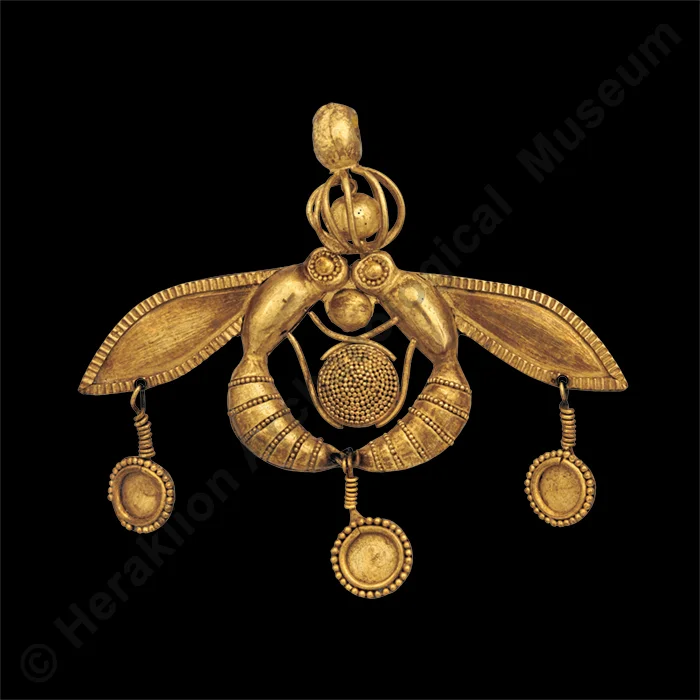
The Greek Bee:
Melissa (Ancient Greek: Μέλισσα, Melissa) is a nymph in Greek mythology.
Her name is related to the term μέλι (méli, honey), and mélissa means honey producer.
Melissa was entrusted with raising the infant god Zeus, who was hidden on Mount Ida by his mother Rhea to escape his father Cronus. Melissa was tasked with feeding him honey, while the goat Amalthea nursed him. She also nursed Amalthea when the god accidentally broke off one of her horns, which later became the cornucopia.
According to another Greek etiological myth, Melissa was loved by the god Apollo, who neglected his duty of driving the sun chariot for her, and was therefore transformed into a bee. In 1930, a gold pendant depicting two bees was found inside a tomb on the island of Crete (more precisely in Malia). The pendant dated between 1800 and 1650 BC (therefore from the Minoan period). Today it is known as the "Bees of Malia."
By the way I actually have a silver reproduction of the pendant that my parents got me when I was a child anche we visited Crete, and for the longest time I thought it was a fly, instead of two bees.
04/05/2026
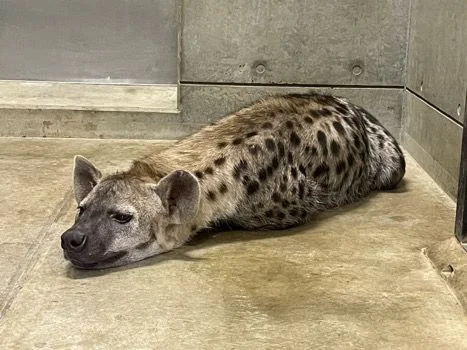
Hyenas:
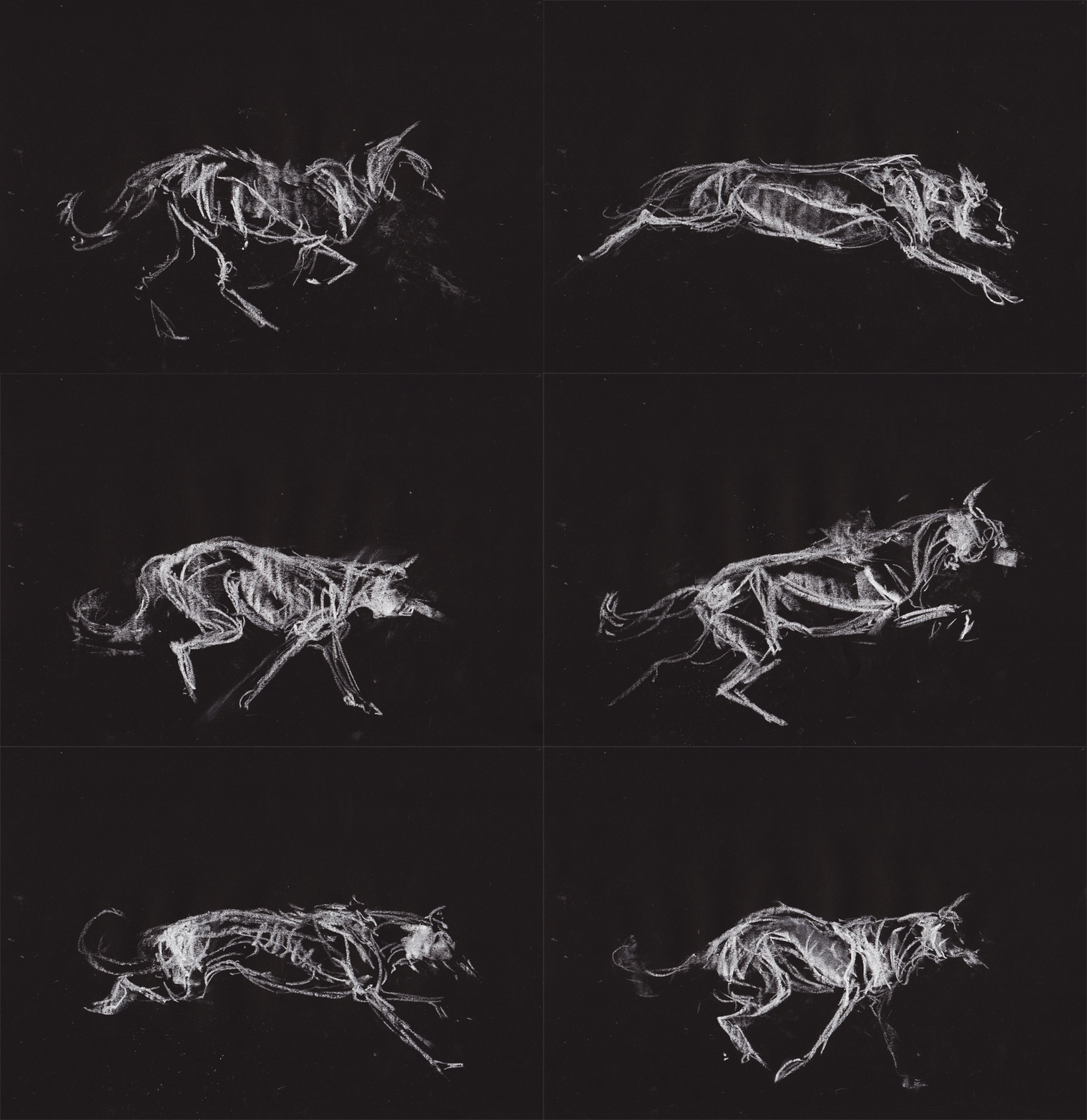
I personally love hyenas, first of all because they have a matriarchy and most importantly because despite their dog-like appearance, they are actually genetically more similar to large cats, which means that they can do the cat loaf :)
(05/05/2026)
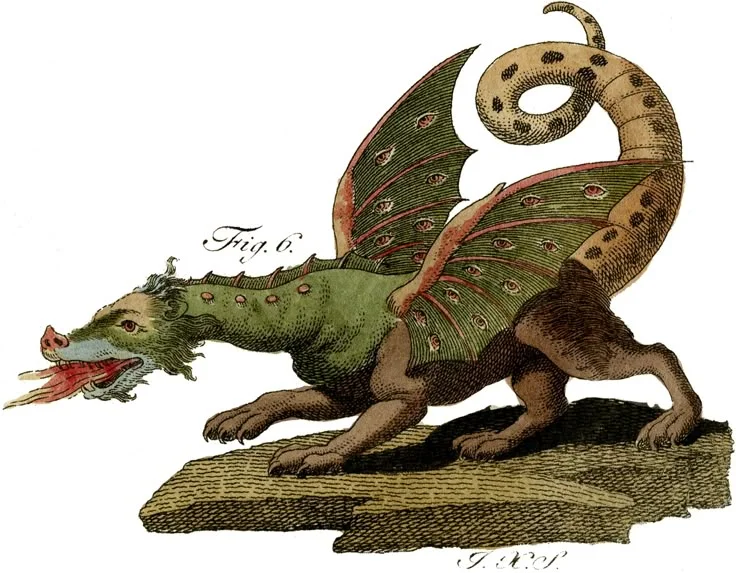
Dragons:
Draconic creatures appear in all cultures around the globe, and the earliest attested reports of draconic creatures resemble giant snakes. They were first described in the mythologies of the ancient Near East and appeared in ancient Mesopotamian art and literature. Stories about storm gods slaying giant serpents occur throughout nearly all Near Eastern and Indo-European mythologies. There are many theories on the origin of the dragon:
In the book An Instinct for Dragons, anthropologist David E. Jones suggests that humans have an innate repulsion for snakes, just like monkeys. Adrienne Mayor in her book The First Fossil Hunters: Dinosaurs, Mammoths, and Myth in Greek and Roman Times argues that ancient populations all over the world found dinosaur fossils(or other prehistoric animals) and created the myth of the dragon. However, the book points out that not all stories of dragons and giants are inspired by fossils, considering that Scandinavia has many stories of dragons and sea monsters, since there are not many fossils and other big reptilians, that might have inspired other countries, have ever lived in the region. Robert Blust in The Origin of Dragons (2000) writes that dragons are just another result of humans trying to explain natural events without science.
Sources(wikipidia)
05/05/2026
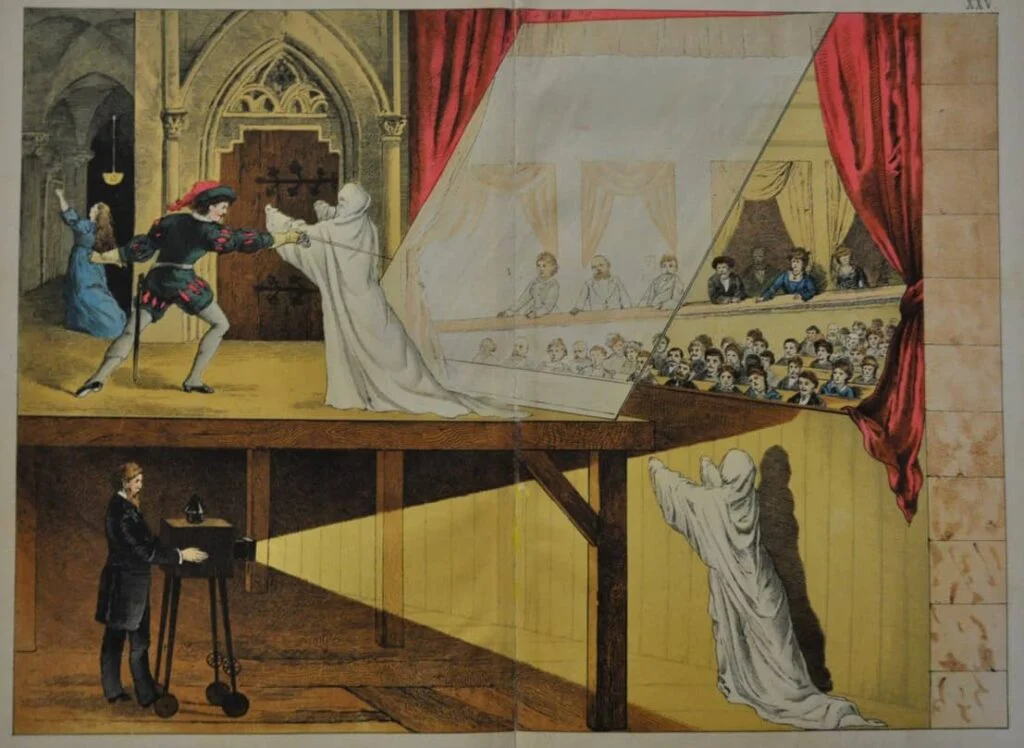
Pepper's Ghost effect:
Pepper's Ghost is an illusion, originally developed as a special effect for the theater. This technique became popular in 1862, after John Pepper used it in a stage production of Charles Dickens's "The Phantom Man." In fact, the technique had already been used in the 16th century by the Italian philosopher and alchemist Giovanni Battista Della Porta. To create the illusion, a sheet of glass, Plexiglas (placed at a 45-degree angle), or other plastic films is used, combined with special lighting techniques, to give the illusion that objects appear and disappear, become transparent, or morph inside others.
10/05/2026
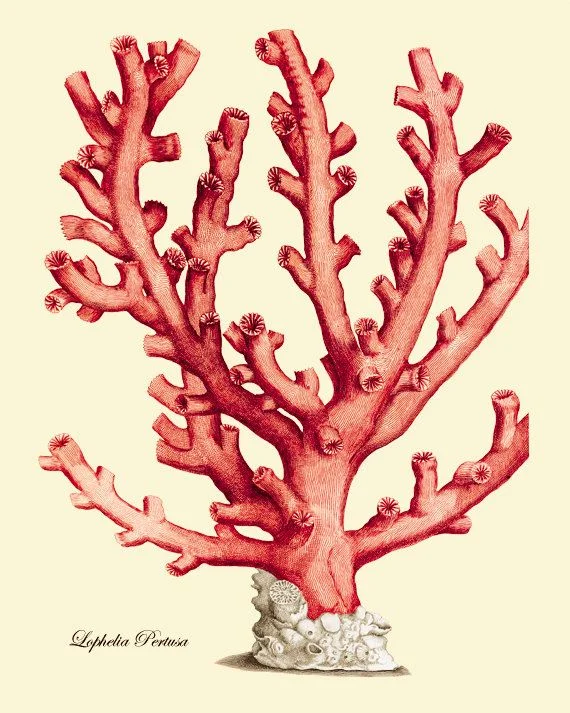
Coral:
According to Ovid (Metamorphoses, IV, 740-752), red coral was born from the blood of one of the Gorgons, Medusa, when Perseus beheaded her. The Gorgons had the ability to petrify with their gaze, and Medusa's blood, upon contact with the foam created by the waves, petrified some seaweed, which turned red with the blood.
Coral is an ancient amulet with apotropaic value for newborns, still widespread today. The Romans believed coral could protect children from harm, as well as cure wounds made by snakes and scorpions and diagnose diseases by changing color. According to pagan tradition, the sharpened twigs pierced the evil eye cast out of envy, while for Christians, its red color recalled the blood of Christ; in fact, it was already used in the Middle Ages for reliquaries of the Cross. Coral thus took on the value of a symbol of the dual nature of Christ, human and divine. For this reason, it is found in numerous late medieval and Renaissance paintings. Among sailors in many countries of the world, coral is considered a lucky charm and a protective amulet.
10/05/2026
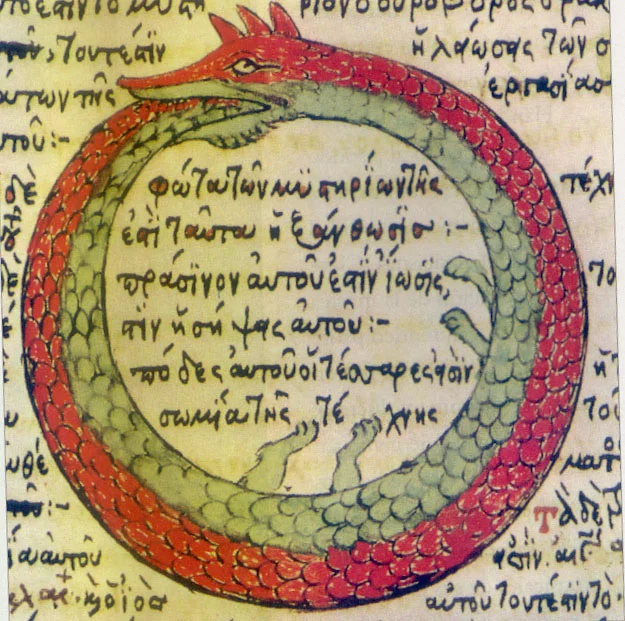
Ouroboros:
The ouroboros is a symbol depicting a serpent or dragon biting its tail, thus forming a circular figure. A very ancient symbol, present among many peoples and throughout different eras, seemingly immobile yet in eternal motion, it represents the power that devours and regenerates itself, the universal energy that is continually consumed and renewed, the cyclical nature of things, which begin again from the beginning after reaching their end. It therefore symbolizes unity, the totality of the world, infinity, eternity, cyclical time, eternal return, immortality, and perfection. The oldest representation of an ouroboros is found in an ancient Egyptian funerary text called The Enigmatic Book of the Netherworld, found in the tomb of the 18th Dynasty Pharaoh Tutankhamun. In Norse mythology, the ouroboros appears as the serpent Jörmungandr, one of the three sons of Loki and Angrboda, who grew so large that he could encircle the world and grasp his own tail in his teeth. In alchemical tradition, the ouroboros is a palingenetic symbol (from the Greek πάλιν, palin, "again" and γένεσις, génesis, "creation, birth," or "born again") that represents the alchemical process, the cyclical succession of distillations and condensations necessary to purify and perfect the "Prima Materia." During transmutation, the Prima Materia divides into its constituent principles, which is why the alchemical ouroboros is often depicted as two serpents chasing each other's tails. The upper one, winged, crowned, and with legs, represents the Prima Materia in its volatile form; the lower one represents the fixed residue. From their reunion into a single, crowned (and therefore victorious) ouroboros, the philosopher's stone, the "great elixir" or "quintessence" is obtained.
10/05/2026
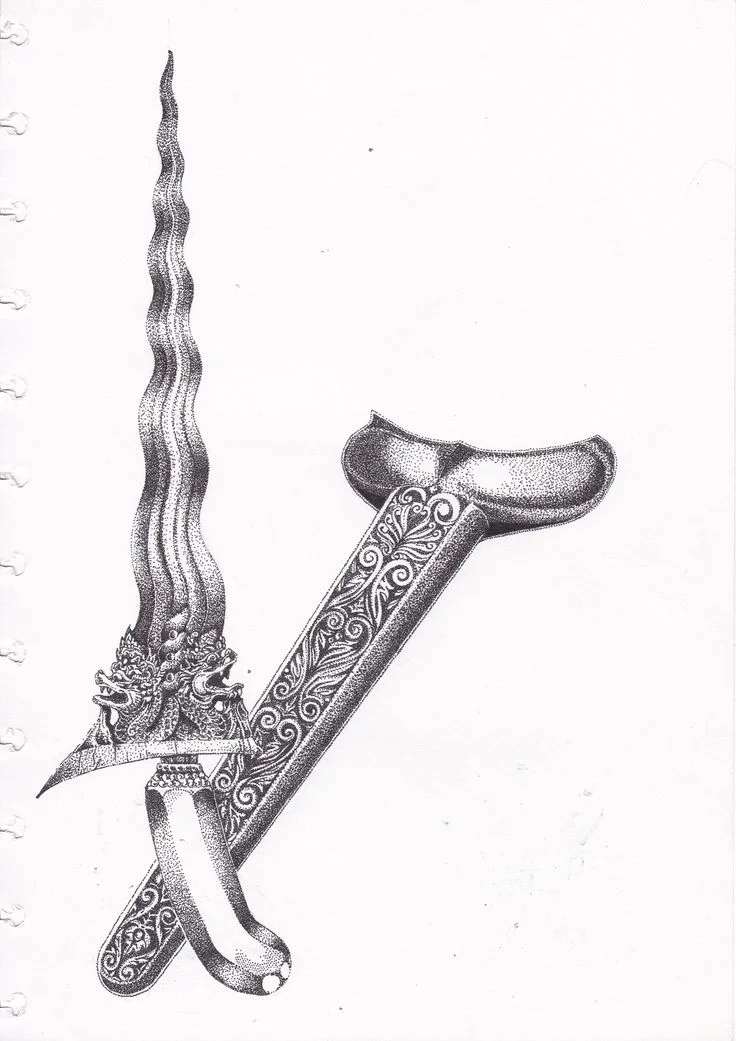
Kris
The Kris is a wavy dagger, probably originating in Java, but widespread throughout the Indonesian archipelago. It has a double blade, which can be made of monosteel or Damascus steel. The workmanship of all parts of the knife and its sheath is meticulously crafted, with countless variations. It is typically 60-70 cm long.In addition to being a highly effective weapon—due to the shape of its blade, it inflicts much greater damage and makes wound healing much more difficult—it also has a symbolic meaning. According to Indonesian tradition, particularly in times of peace when its use was unnecessary, the Kris was used in ceremonies. The Kris Si Naga was famous, used in Brunei to confirm and crown sultans, and possession of which alone allowed a request to ascend to the throne.Furthermore, during the forging process, it was believed that these blades could trap spirits, or souls, both good and bad, within them; the process itself determined whether the weapon was "lucky" or "cursed."
03/07/2026
Mandrake
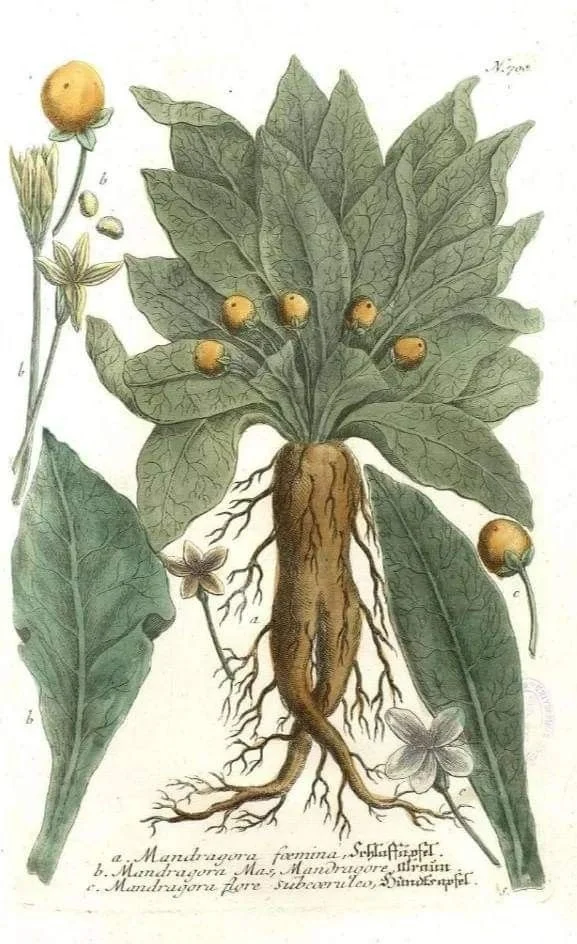
This plant is famous for its roots. They resemble the shape of a human, and this is where the mythology surrounding it originates. Already in ancient times, it was a common ingredient in mythological and legendary potions. During the Middle Ages, it was attributed with various magical abilities, the most famous being its deadly cry. It was believed that the safest method to extract it from the earth was to attach a dog to it, then walk away and let the animal suffer the consequences of the cry. It appears in various alchemical texts, but it is also famous for belonging to the class of ingredients used in witchcraft. Although the plant does not actually have a deadly cry, it does have other peculiar properties: its root, if ingested in large quantities, can lead to hallucinations and delusions; the autumn mandrake in particular appears to be even more toxic than the others. However, in small doses, it can also improve certain physical problems since it has anesthetic properties.
03/07/2026